Unlocking Your Child Tax Credit in 2026: A Step-by-Step Guide for Up to $2,000 Per Child

Anúncios
Navigating family finances can be challenging, but understanding the Child Tax Credit 2026 guidelines can make a significant difference. This year, thousands of households are eligible to receive essential relief directly through the federal tax system.
The program offers up to $2,000 per qualifying dependent, providing a substantial boost to your household budget. Securing this vital government benefit depends entirely on meeting specific criteria and filing your paperwork correctly.
This comprehensive guide breaks down the latest IRS regulations, eligibility requirements, and phase-out thresholds. Learn exactly how to claim this lucrative parenting subsidy and maximize your family’s upcoming return.
Eligibility Requirements for the Child Tax Credit 2026
To qualify for the Child Tax Credit 2026, several conditions must be met concerning both the child and the taxpayer. These requirements are designed to ensure the credit reaches families who need it most, providing targeted financial assistance.
The child must meet age, relationship, residency, and support tests, while the taxpayer must also meet income thresholds. Understanding these criteria precisely will prevent common errors during the filing process.
It is important to note that even if you do not owe any taxes, you might still be eligible for a refundable portion of the credit. This means you could receive a payment even if your tax liability is zero.
Defining a Qualifying Child
A qualifying child for the Child Tax Credit 2026 must be under the age of 17 at the end of the tax year. This means they must be 16 years old or younger on December 31, 2026, to be considered eligible.
The child must also be your son, daughter, stepchild, foster child, brother, sister, half-brother, half-sister, stepbrother, stepsister, or a descendant of any of them. This broad definition covers a variety of family structures.
- The child must be under age 17 at the close of 2026.
- The child must be your son, daughter, stepchild, foster child, or a descendant.
- The child must have lived with you for more than half of the 2026 tax year.
- The child must not provide more than half of their own support for the year.
Income Thresholds and Phase-Out Rules
The Child Tax Credit 2026 is subject to income limitations, which means the credit amount begins to phase out for higher-income taxpayers. These thresholds are crucial for determining the exact amount you can claim.
For married couples filing jointly, the credit begins to phase out at a modified adjusted gross income (MAGI) of $400,000. For all other filers, including single parents, the phase-out generally starts at $200,000.
Understanding these income limits is vital because exceeding them can reduce or even eliminate your credit. Carefully calculate your MAGI to accurately assess your potential credit amount.
Documentation Required for the Child Tax Credit 2026
Accurate and complete documentation is essential when claiming the Child Tax Credit 2026. The IRS requires specific records to verify eligibility and prevent fraudulent claims, so having everything organized beforehand is crucial.
Gathering all necessary documents well in advance of tax season will simplify the filing process and reduce the likelihood of delays or audits. This proactive approach ensures a smoother experience.
Key documents include identification for both the taxpayer and the child, as well as proof of residency and relationship. Any missing information can lead to complications.
Essential Records for Verification
To successfully claim the Child Tax Credit 2026, you will need to provide various forms of identification and proof. This includes Social Security numbers or Individual Taxpayer Identification Numbers (ITINs) for all qualifying children.
You will also need to demonstrate proof of residency for the child, confirming they lived with you for more than half the year. School records, medical bills, or similar documents can serve this purpose effectively.
- Valid Social Security Number (SSN) or ITIN for each qualifying child.
- Proof of child’s residency for over half the year (e.g., school records, medical statements).
- Documents proving the relationship between you and the child (e.g., birth certificates, adoption papers).
- Income statements such as W-2s and 1099s to determine eligibility.

Organizing Your Financial Statements
Beyond personal identification, organizing your financial statements is critical for accurate reporting of the Child Tax Credit 2026. This includes W-2 forms from employers, 1099 forms for contract work, and any other income statements.
Having a clear record of your adjusted gross income (AGI) is vital, as this figure directly impacts your eligibility and the amount of credit you can receive. Keep all relevant tax documents in a secure, accessible location.
Consider using tax software or consulting a tax professional to ensure all financial data is correctly entered and calculated. This can help prevent common errors and maximize your eligible credit.
Step-by-Step Guide to Claiming the Child Tax Credit 2026
Claiming the Child Tax Credit 2026 involves a series of straightforward steps that, when followed carefully, ensure you receive your due benefits. This process typically begins with gathering your tax documents and ends with filing your return.
Understanding each stage of the process can alleviate stress and prevent common pitfalls that might delay your refund. A systematic approach is always recommended for tax-related matters.
Whether you choose to file electronically or by mail, adherence to deadlines and accurate reporting are paramount. The IRS provides numerous resources to assist taxpayers.
Preparing Your Tax Return
The first step in claiming the Child Tax Credit 2026 is to prepare your tax return accurately. This involves compiling all your income statements, deductions, and credits into the appropriate forms.
Most tax software programs will guide you through the process of entering your child’s information and automatically calculate the credit amount. If you are using a tax professional, they will handle this for you.
- Gather all necessary documents: W-2s, 1099s, Social Security Numbers for dependents.
- Choose your filing method: tax software, online service, or a certified tax professional.
- Input all relevant information accurately, paying special attention to dependent details.
- Review your return thoroughly before submission to catch any potential errors.
Filing and Receiving Your Credit
Once your tax return is prepared, the next step is to file it with the IRS. Electronic filing is generally the fastest and most secure method, often resulting in quicker processing of refunds, including the Child Tax Credit 2026.
If you are eligible for the refundable portion of the credit, often referred to as the Additional Child Tax Credit, you will receive it as part of your tax refund even if you owe no tax. This can be a significant boost to family finances.
Keep a copy of your filed return and all supporting documents for your records. This is good practice for future reference and in case the IRS has any questions.
Impact of the Child Tax Credit on Family Budgets
The Child Tax Credit 2026 can have a profound impact on the financial well-being of families across the United States. For many, this credit represents a crucial lifeline, helping to cover essential expenses and improve living standards.
The up to $2,000 per child can be used for various needs, from educational supplies and childcare to groceries and healthcare. This flexibility allows families to address their most pressing financial concerns.
Understanding how this credit integrates into your overall financial plan can help you budget more effectively throughout the year. It’s more than just a tax break; it’s a direct investment in families.
Financial Relief and Economic Stability
For low-to-middle-income families, the Child Tax Credit 2026 provides much-needed financial relief, contributing to greater economic stability. This credit can reduce poverty and enhance the financial security of households with children.
The refundable nature of a portion of the credit ensures that even families with little or no tax liability can benefit, providing a direct cash injection. This is particularly important for those struggling to make ends meet.
Studies have consistently shown that policies like the Child Tax Credit lead to improved outcomes for children, including better nutrition, educational attainment, and overall health. It’s a benefit with widespread positive effects.
Planning for the Future with the Child Tax Credit
Families can leverage the Child Tax Credit 2026 to plan for future financial goals, such as saving for college, making a down payment on a home, or building an emergency fund. Integrating this expected credit into your long-term financial strategy is a smart move.
Consulting with a financial advisor can help families maximize the utility of their Child Tax Credit, ensuring it contributes to sustainable financial growth. Strategic planning can turn a temporary benefit into lasting security.
Whether used for immediate needs or future investments, the credit offers a tangible benefit that can significantly alter a family’s financial trajectory. It empowers parents to make choices that directly benefit their children.
Common Mistakes to Avoid with the Child Tax Credit 2026
Navigating tax regulations can be complex, and errors when claiming the Child Tax Credit 2026 are not uncommon. Being aware of these typical mistakes can save you time, effort, and potential issues with the IRS.
Incorrectly reporting income, misinterpreting eligibility rules, or failing to provide adequate documentation are frequent errors. Proactive attention to detail is your best defense against these problems.
Understanding the nuances of the credit, especially regarding shared custody or children with ITINs, is crucial. Each specific situation requires careful consideration to avoid discrepancies.
Misinterpreting Eligibility Criteria
One common mistake is misinterpreting the eligibility criteria for the Child Tax Credit 2026, particularly regarding the age and residency tests. A child must be under 17 for the entire tax year and live with you for more than half of it.
Another frequent error involves the relationship test, where taxpayers claim children who do not meet the specified familial relationship. Always double-check these core requirements before filing.
- Claiming a child who turned 17 before the end of the tax year.
- Not meeting the residency test (child lived with you for less than half the year).
- Incorrectly reporting the relationship between the taxpayer and the child.
- Failing to meet the income thresholds, leading to a reduced or eliminated credit.
Inaccurate Income Reporting and Documentation
Inaccurate income reporting is another significant pitfall when claiming the Child Tax Credit 2026. Your adjusted gross income (AGI) directly affects the credit amount, and errors here can lead to incorrect calculations or audits.
Failing to provide proper documentation for your child’s Social Security Number or ITIN can also cause problems. The IRS is strict about verifying the identity of dependents to prevent fraud.
Keep all your income statements and supporting documents organized and readily available. This meticulous approach ensures that all information submitted is accurate and verifiable, streamlining the process considerably.
Updates and Potential Changes for 2026
While the core structure of the Child Tax Credit 2026 is largely established, legislative discussions and economic factors can always introduce potential changes. Staying informed about these developments is vital for accurate planning.
Policymakers frequently assess the credit’s impact and may propose adjustments to eligibility, amounts, or refundability. These changes, if enacted, could significantly alter how the credit functions.
Monitoring official announcements from the IRS and legislative bodies is the best way to keep abreast of any modifications. Reliable news sources will also report on relevant updates as they emerge.
Legislative Outlook and IRS Guidance
The legislative outlook for the Child Tax Credit 2026 is subject to ongoing debate in Congress, with various proposals aimed at expanding or modifying its provisions. These discussions could influence the final rules.
The IRS will issue official guidance and publications as tax season approaches, detailing any changes to forms, instructions, or eligibility criteria. These documents are the definitive source of information for taxpayers.
- Monitor official IRS website for updated publications and FAQs.
- Follow news from reputable financial and government reporting agencies.
- Consult with tax professionals who are up-to-date on legislative developments.
- Be aware of potential changes to income thresholds or credit amounts.
Preparing for Future Adjustments
Preparing for potential adjustments to the Child Tax Credit 2026 involves maintaining flexibility in your financial planning. While significant changes are often announced in advance, minor tweaks can occur.
It’s advisable to prepare your taxes with the most current information available, but also to be ready to adapt if new legislation is passed. This proactive mindset can save you from last-minute complications.
Subscribing to IRS alerts or financial news feeds can provide timely notifications regarding any modifications. Being prepared for any eventuality ensures you can still claim your maximum eligible credit.
Maximizing Your Child Tax Credit 2026
Maximizing your Child Tax Credit 2026 involves a combination of careful planning, accurate record-keeping, and staying informed about all applicable rules. Every eligible dollar counts, and ensuring you receive the full amount is a key financial goal.
This means not only meeting the basic eligibility requirements but also understanding how other tax provisions might interact with the credit. A holistic view of your tax situation is always beneficial.
Don’t hesitate to seek professional advice if your situation is complex or if you have questions about specific aspects of the credit. Expert guidance can uncover opportunities you might miss.
Strategic Tax Planning
Strategic tax planning can play a pivotal role in maximizing your Child Tax Credit 2026. This includes reviewing your income and deductions throughout the year to ensure you stay within favorable income thresholds.
For instance, contributing to tax-advantaged accounts like 401(k)s or IRAs can lower your adjusted gross income, potentially increasing your eligibility for the full credit. Every financial decision can have an impact.
- Review your income and deductions regularly to manage your AGI.
- Consider contributions to retirement accounts to lower taxable income.
- Keep meticulous records of all child-related expenses and support.
- Consult a tax professional for personalized advice on optimizing your claim.
Utilizing Available Resources
The IRS provides a wealth of free resources to help taxpayers understand and claim the Child Tax Credit 2026. Their website offers publications, FAQs, and interactive tools designed to assist with tax preparation.
Additionally, free tax preparation services, such as those offered by the Volunteer Income Tax Assistance (VITA) and Tax Counseling for the Elderly (TCE) programs, can provide invaluable support for eligible individuals and families.
Leveraging these resources can ensure that your tax return is prepared accurately and that you claim all the benefits you are entitled to, including the maximum Child Tax Credit. Don’t leave money on the table.
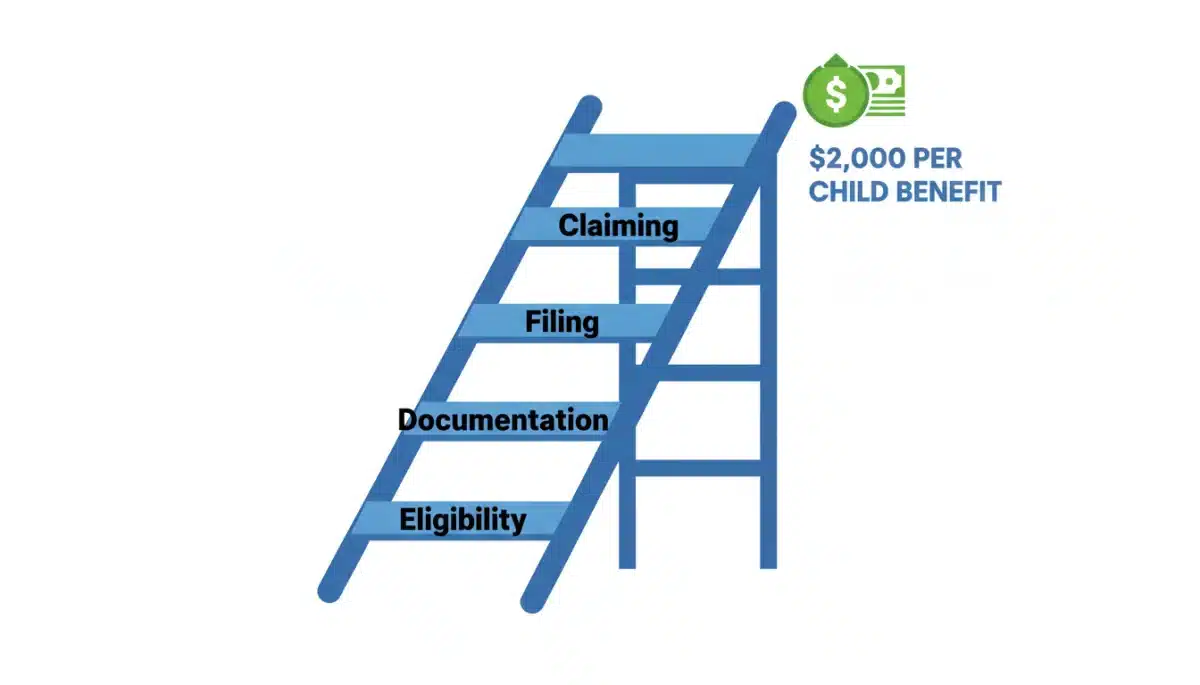
| Key Point | Brief Description |
|---|---|
| Max Credit | Up to $2,000 per qualifying child for 2026. |
| Eligibility | Child must be under 17, meet residency, relationship, and support tests. |
| Documentation | SSN/ITIN, proof of residency, relationship, and income statements. |
| Filing | Prepare tax return, file accurately, and receive refundable portion. |
Frequently Asked Questions About the Child Tax Credit 2026
For the 2026 tax year, eligible families can claim a maximum Child Tax Credit of up to $2,000 per qualifying child. A portion of this credit may be refundable, meaning you could receive it even if you owe no federal income tax.
A qualifying child must be under age 17 at the end of 2026, be your son, daughter, stepchild, foster child, or a descendant, have lived with you for more than half the year, and not provide more than half of their own support.
The credit begins to phase out for married couples filing jointly with a modified adjusted gross income (MAGI) exceeding $400,000. For all other filers, the phase-out generally starts at a MAGI of $200,000.
You will need valid Social Security Numbers or ITINs for all qualifying children, proof of their residency, documents establishing your relationship, and your income statements like W-2s and 1099s to verify eligibility and credit amount.
Yes, a portion of the Child Tax Credit is refundable, known as the Additional Child Tax Credit. This means even if your tax liability is zero, you may still receive a payment as part of your tax refund, providing direct financial assistance.
Looking Ahead
The insights provided for Child Tax Credit 2026 underscore the critical role this benefit plays in supporting American families. As we move closer to the 2026 tax season, continued vigilance regarding IRS updates and potential legislative changes remains paramount.
Families should proactively gather necessary documentation and understand eligibility criteria to ensure they can claim the full up to $2,000 per child.
This proactive approach will not only simplify the filing process but also secure vital financial aid, contributing significantly to household stability and future planning.